
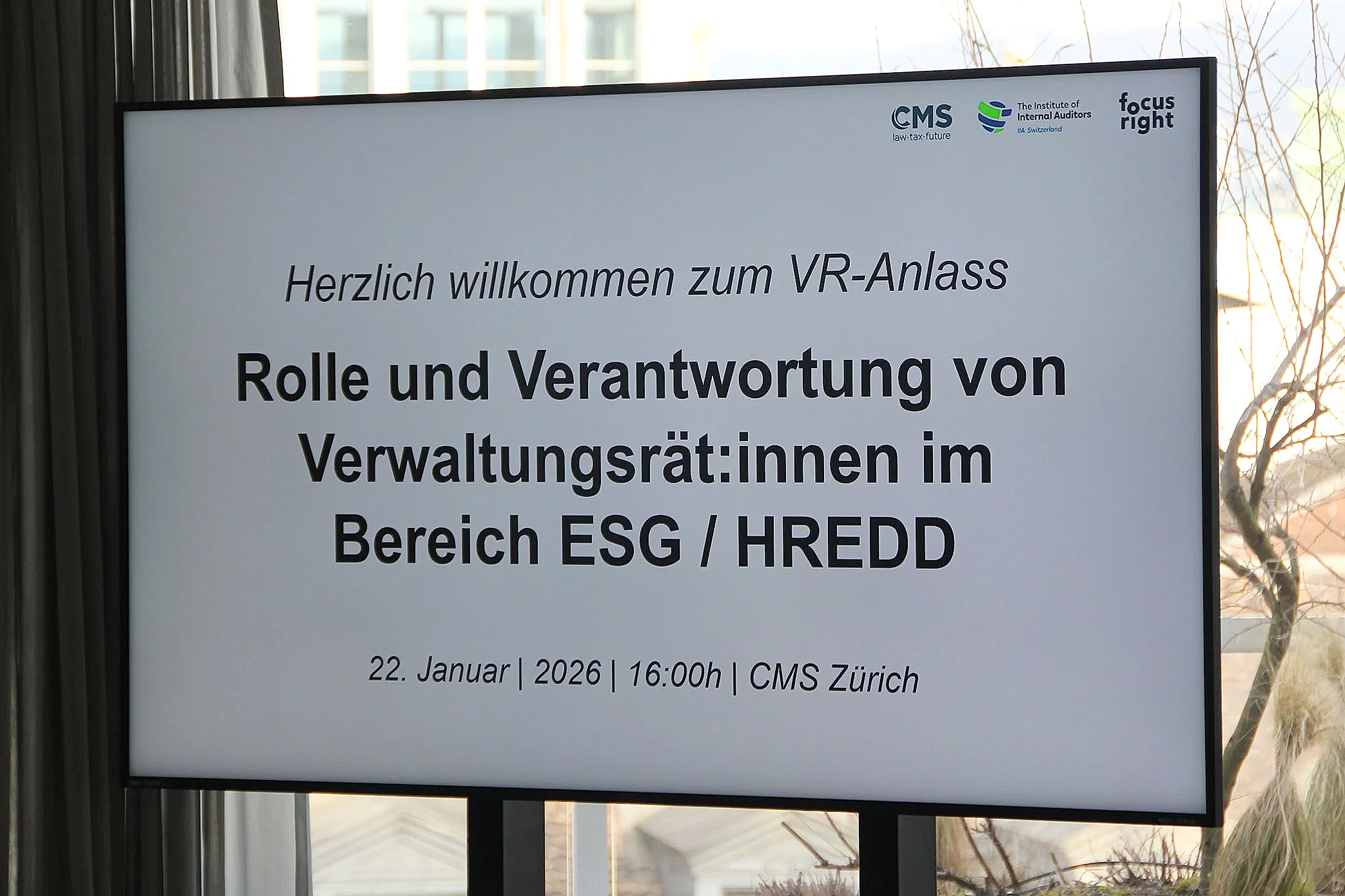
HREDD event for board members on 22 January 2026 in Zurich
Event for Board Members
On 22 January 2026, together with CMS Switzerland and IIA Switzerland, focusright hosted an exclusive event for board members in Zurich. More than 60 participants gathered to discuss the role and responsibility of board members in the context of ESG and Human Rights & Environmental Due Diligence (HREDD). Key moments of the event included:
A keynote from Valérie Berset Bircher, Head of International Labour Affairs at the State Secretariat for Economic Affairs (SECO), on the relevance of HREDD for companies and on the role of the Swiss National Action Plan for Business and Human Rights
Legal insights from the law firm CMS Switzerland on board duties and liability in the context of ESG and HREDD
A panel discussion with experienced board members from leading Swiss companies:
Bernadette Koch (Geberit, Mobimo, Post, PostFinance)
Michael Hilb (Klingelnberg, Sigvaris)
Petra Joerg (Coop)
Regula Wallimann (Adecco, Straumann, Swissport)
This blog post summarizes the key takeaways and highlights the crucial role of board members in shaping effective and meaningful HREDD.
Legal Responsibility of Board Members
“ESG is not a ‘nice-to-have’ but a legal obligation for board members. They are responsible for the overall management and supervision of the company and its legal obligations.” – CMS Switzerland
Board members are legally expected to ensure compliance with due diligence obligations under emerging ESG and HREDD regulations. This includes obligations from foreign laws such as the EU Corporate Sustainability Due Diligence Directive (for more information please consult our recently revised CSDDD Q&A). This responsibility goes far beyond passive oversight. It includes supervising risk assessments, approving policies, and ensuring that ESG and human rights principles are embedded in corporate governance.
The law firm CMS Switzerland confirmed this in their presentation and emphasized that ESG related topics are a legal obligation for board members, not a ‘nice-to-have’. To be optimally prepared for regulatory requirements, they recommended implementing HREDD management systems aligned with international standards such as the UN Guiding Principles on Business and Human Rights (UNGPs), a notion we supported in our latest Q&A on legal HREDD requirements.
Due to the regulatory expectations, HREDD is increasingly perceived as creating significant administrative burden. The panellists agreed that boards play a pivotal role in ensuring that resources are allocated not only to reporting and formal compliance with recent legislations, but into effectively steering the company towards meaningful implementation of HREDD. Petra Joerg highlighted the need for an impact-oriented approach towards HREDD compliance:
“HREDD needs to be impact-oriented, not compliance-driven – then it can create real added value.” – Petra Joerg (Coop)
Competitiveness through HREDD
In her keynote, SECO ambassador Valérie Berset Bircher underlined that HREDD can strengthen competitiveness, referring to a recent UNDP study:
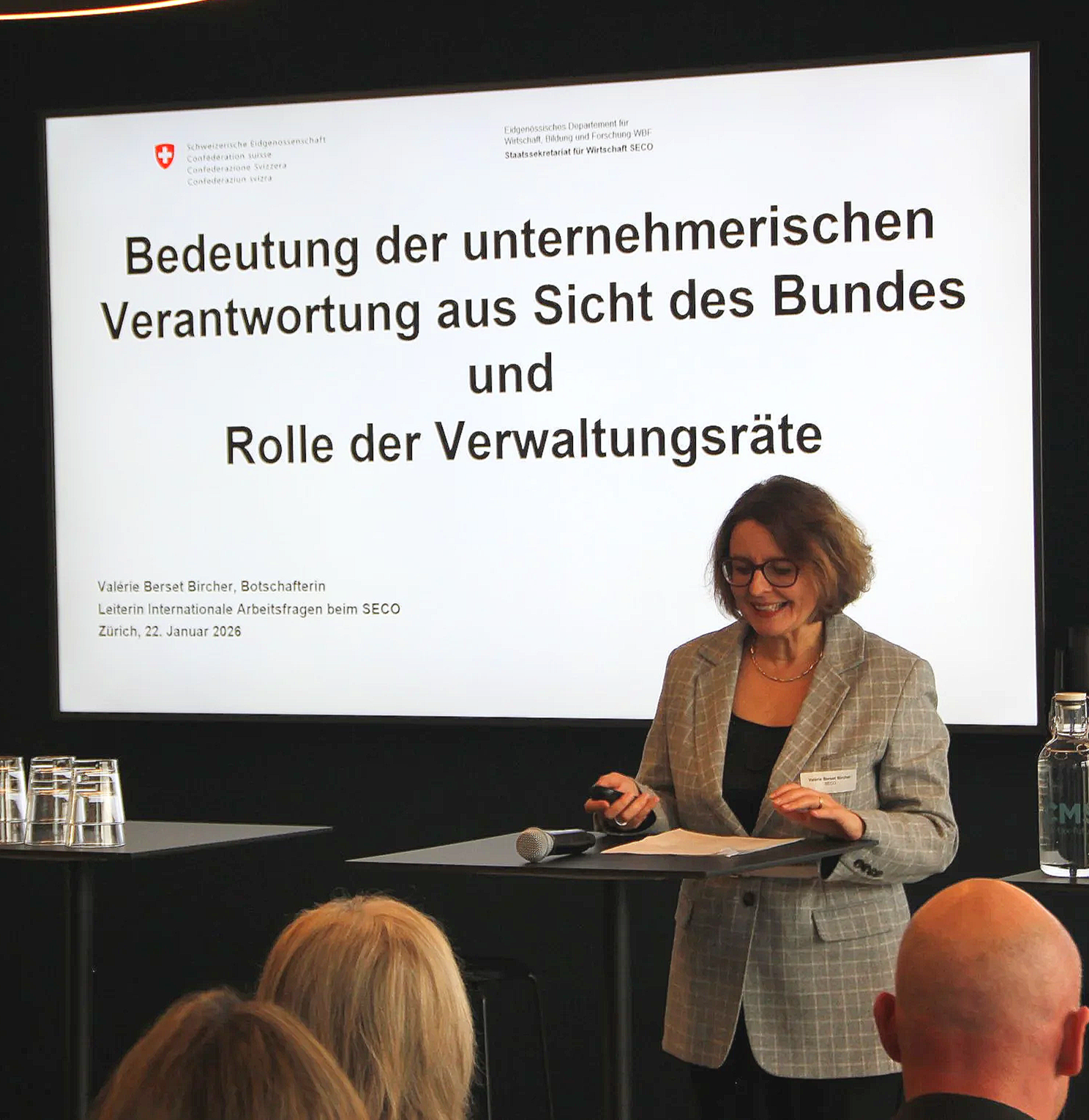
“Companies that implement due diligence early gain strategic advantages through reduced legal and reputational risks, better access to international markets, innovation opportunities, and increased attractiveness and competitiveness.”
– Valérie Berset Bircher (SECO)
The study, which analysed 235 companies over five years, found no evidence of a net financial setback for businesses. On the contrary, due diligence was associated with operational benefits such as more resilient supply chains and a more productive workforce. The key question for boards is therefore no longer whether companies can afford HREDD, but how HREDD can be leveraged for sustainable competitiveness and strategic advantage. Regula Wallimann emphasized board members’ responsibility to drive this cultural change by setting the tone from the top, ensuring that HREDD is treated as a core business issue:
“Board members must make sustainability a priority and authentically exemplify it. Only then can a company create genuine added value through responsible business conduct.” – Regula Wallimann (Adecco, Straumann, Swissport)
Strategic Integration and Governance
The panellists agreed that HREDD is a strategic leadership issue, not an optional extra or legislative burden. In order to realise its full potential, companies should embed HREDD into their core business strategies and corporate culture, rather than treating it solely as a compliance requirement. This was highlighted by Michael Hilb who advocates that companies must move from corporate governance of sustainability to a sustainable corporate governance:
“Sustainable governance means thinking beyond compliance. Owners and board members must develop a shared vision of sustainable development and take responsibility for actively shaping it.” – Michael Hilb (Klingelnberg, Sigvaris)
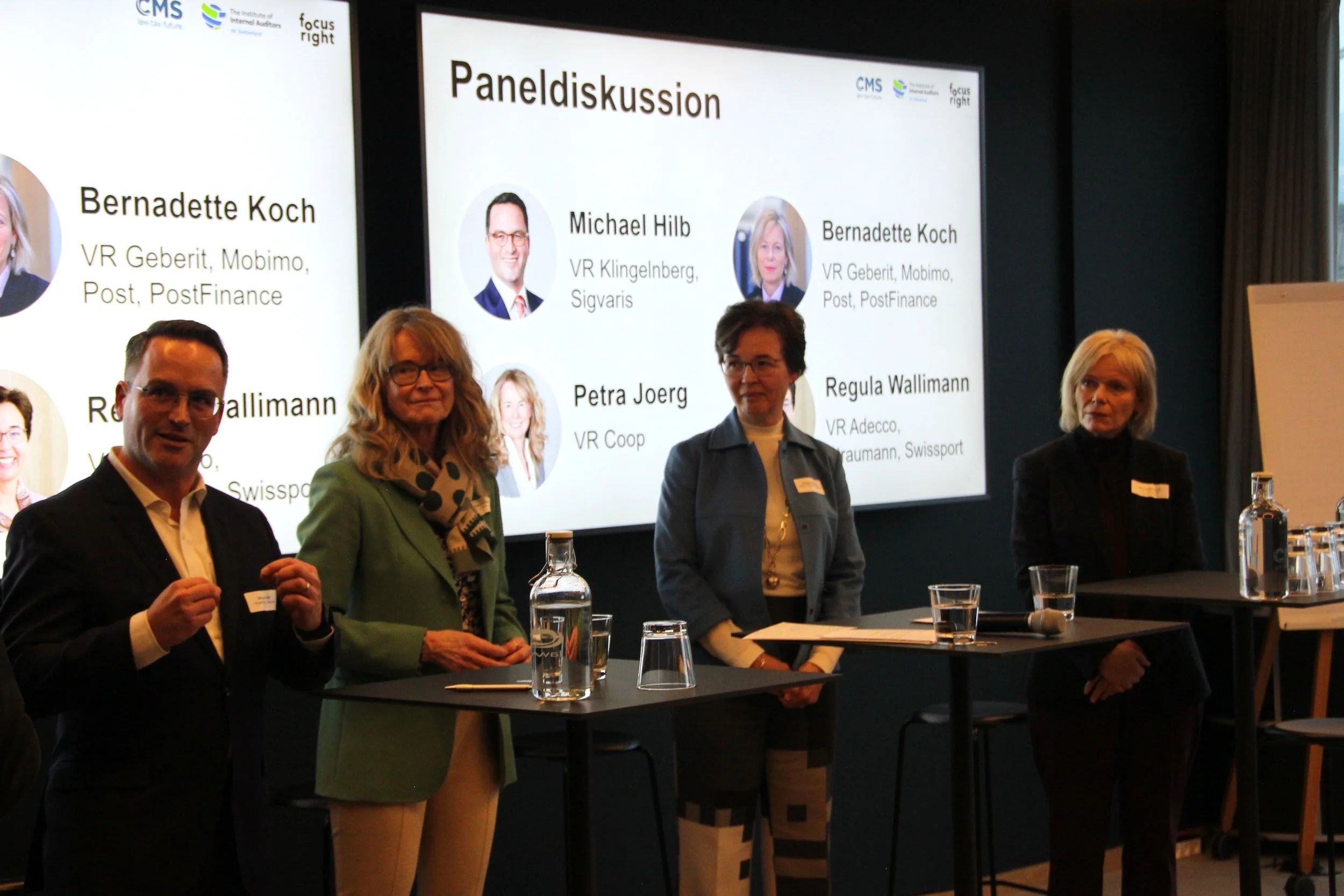
Panel discussion with Michael Hilb, Petra Joerg, Regula Wallimann, and Bernadette Koch (from left to right)
This implies that HREDD must be integrated into strategy, decision-making, and long-term objectives. To ensure meaningful strategic integration, board members must introduce a strong HREDD governance by assigning responsibilities, establishing oversight mechanisms, and ensuring that HREDD is adequately resourced and monitored. Bernadette Koch emphasized the board’s agenda-setting power:
“Governance only works if the board actively sets the agenda. The board must ensure that sustainability is treated strategically and that enough people with authority champion the topic.” – Bernadette Koch (Geberit, Mobimo, Post, PostFinance)
Conclusion
The event highlighted one central insight: board members are key drivers of change. By setting the tone from the top, committing to responsible leadership, and embedding robust governance systems, boards can turn regulatory obligations into strategic opportunities. When HREDD is impact-oriented and integrated into core business strategy, it strengthens resilience, competitiveness, and long-term value creation, allowing business success and responsible business conduct to reinforce each other.